L Breevoort
Kilometervreter
Hoe ziet de autowereld er uit als het einde van het benzinetijdperk heel dichtbij komt? In China lijkt het benzine-eindspel begonnen en ik las in m'n pauze op Jiemian een heel interessant artikel over dit fenomeen. Hieronder de Engelse vertaling. Nu nog even zonder commentaar, want ik moet weer aan het werk.
Automakers and dealers have already begun proactively reducing the supply of fuel vehicles, shifting from pursuing sales scale to filtering profit per vehicle.
Ge Cheng June 22, 2026, 13:37 Source: Jiemian News

Image source: Jiemian News Gallery
With 2026 nearly halfway through, the pace of fuel vehicle decline in the Chinese market has exceeded most predictions at the beginning of the year.
Data from the China Passenger Car Association shows that retail sales of conventional fuel passenger cars in May fell by 39% year-on-year, while the overall national passenger car sales fell by 22.1% during the same period. Among the top ten models in multiple monthly retail rankings, there were no fuel vehicles left.
The rise in international oil prices has raised the cost of using fuel vehicles and weakened the few consumers willing to buy cars. Jiemian News has noticed that automakers and dealers have already begun proactively reducing the supply of fuel vehicles, shifting from pursuing sales scale to filtering profit per vehicle. Meanwhile, the compact sedan, once the most stable and largest segment of joint-venture brands, is undergoing fundamental shaking.
Models like the Toyota Corolla, Toyota Levin, Honda Civic, Volkswagen Sagitar, and Nissan Sylphy target mainstream family users in the 100,000 to 150,000 yuan range, serving as the core functions of joint venture brand sales scale, driving traffic to dealers, and spreading channel costs. But now, this fundamental base is starting to loosen.
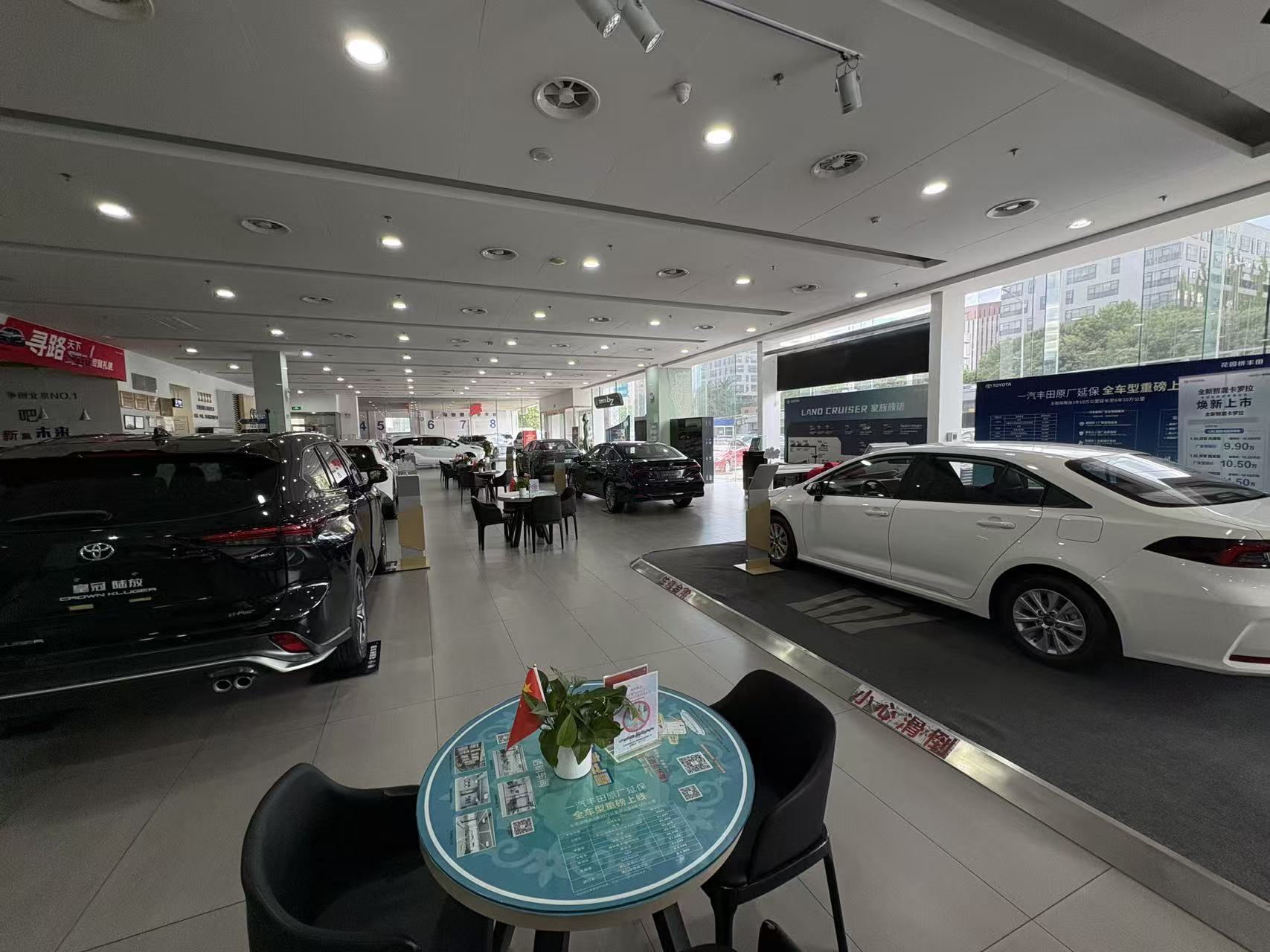 Inside FAW Toyota stores, only one out of nearly ten display cars is a new energy vehicle. Photo by Ge Cheng
Jiemian News recently visited several joint venture brand stores in Beijing and noticed that a GAC Toyota storefront had only four cars on display, including two new energy vehicles and two fuel vehicles. Compared to the peak period, when nearly ten different models were displayed in the showroom, this is a clear contrast. Levin, which once supported half the brand, has now withdrawn from the showroom.
"Sell every car you sell and lose money. No more displaying it." Sales staff told Jiemian News that Levin has now shifted to order-based production, with stores no longer maintaining regular inventory or relying on it to attract customers.
According to third-party platform data, Levin's retail sales in May have dropped to 194 units, whereas three years ago, monthly sales of this model remained above 10,000 units, making it an important pillar of GAC Toyota.
Similar strategies are becoming evident in more joint venture brand stores. Models with severe losses and slow turnover are being withdrawn or production schedules reduced, while models with sales bases or profit margins are retained. The business model for fuel vehicles shifted from full-range distribution to selective supply.
The pace of contraction varies among brands; joint venture brands lacking new energy vehicle products and undergoing slow transformation still rely on fuel vehicles to attract traffic. GAC Honda's showroom still has five cars on display, all of which are gasoline models; FAW Toyota's showroom features nearly ten models, but only one is not a fuel vehicle.
Most of these retained fuel models are mid-size cars or SUVs with higher positioning and greater profit margins. However, sales representatives from these brands also told Jiemian News that manufacturers have significantly reduced fuel vehicle production this year, and may further reduce the range of fuel vehicle models in the future.
For automakers, maintaining a model with declining sales means maintaining systems for parts procurement, production scheduling, logistics, marketing, and spare parts. When sales are insufficient, these costs are hard to spread out. Reducing the number of models can improve production capacity and capital efficiency, and also avoid further subsidies to maintain market share. Dealers can also reduce inventory and cash usage.
But the cost is further loss of foot traffic. Consumers entering stores for Corolla or Levin may purchase higher-priced models, which may also bring loans, insurance, boutique goods, and trade-in income. After these models are removed, consumers' choices narrow, and conversion opportunities for finance, insurance, and luxury sales decline.
Dealers of joint venture brands are caught in a dilemma. Continuing to sell low-priced fuel vehicles makes it difficult to generate sufficient gross profit; Further contraction of supply will weaken passenger flow and drive up the allocation of fixed costs such as rent and personnel within each vehicle sold.
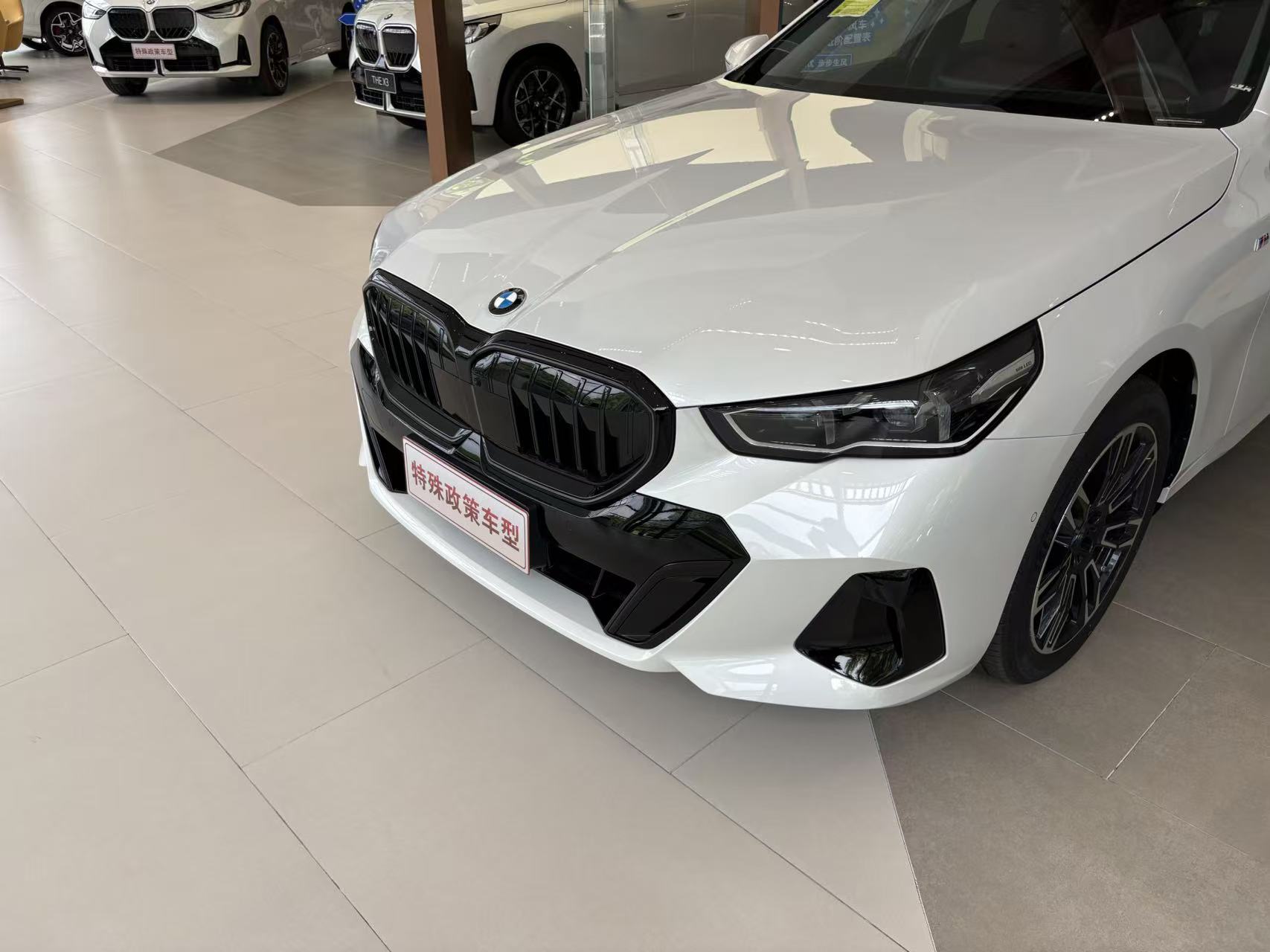 Inside BMW stores, several domestically produced new cars are marked as special policy models, with corresponding loans and discounts. Photo by Ge Cheng
With the reduction in vehicle models, some stores have also closed or reduced their operating area. Sales staff told Jiemian News that GAC Honda's dealerships in Beijing have been reduced from 17 to 8; Some other brands' distributors have also started downsizing showrooms, reducing staff, and cutting daily expenses.
Sales staff are also shifting to new energy brands. A salesperson from a joint venture brand told Jiemian News that several former colleagues have already joined companies like Li Auto and NIO. Although new energy stores work longer hours, their customer flow, transaction opportunities, and revenue are all higher than those of traditional 4S dealerships.
Fuel models still in showrooms are being sold at unprecedented discounts, but this has not led to simultaneous sales growth.
Jiemian News found that the GAC Toyota Camry received a 50,000 yuan terminal discount, FAW Toyota Avalon 60,000 yuan, and a total discount of 75,000 yuan on the GAC Honda Accord. These three mid-size joint-venture brands, which used to be priced steadily around 200,000 yuan, now generally have their terminal transaction prices have generally dropped to the 130,000 to 150,000 yuan range, which is about 60% to 70% of the original price.
Several salespeople reported that even though prices have dropped to historic lows and customer flow has increased, fewer people are actually placing orders. The decision cycle for consumers to place orders has more than doubled compared to previous years.
"The price is indeed cheaper, but I want to see if it can drop again next month." A middle-aged customer who came to inquire about Camry told Jiemian News. When price cuts become the norm, consumers' wait-and-see attitude intensifies, creating a cycle of "the more prices drop, the more you wait; the more you wait, the more prices drop."
Behind the difficulty in price cuts is the slow pace of updating fuel vehicle products. Currently, domestic new energy companies generally maintain a product cycle of one model update every year and one generation every two years, while mainstream joint-venture brands typically have a replacement cycle of over five years for fuel vehicles.
According to Jiemian News, the hybrid version of the GAC Honda Accord was discontinued two or three months ago because it could not meet the new national standard for a pure electric range of 100 kilometers, and the next-generation new energy model is expected to be released in 2027. Mercedes-Benz is also facing a product gap period, with the GLE currently clearing inventory to welcome the domestically produced extended version, and the replacement milestone for the new model is set for 2027.
Li Yanwei, an expert member of the Expert Committee of the China Automobile Dealers Association, wrote that nearly three-quarters of new energy vehicle sales come from products that have just been launched or updated within the past six months, while only 50% of new fuel vehicles are released within the past six months, and 38% are made up between 6 and 12 months. This shows that older fuel car models are sold through discounts, which is a way to absorb inventory rather than vitality.
"This is a natural process of elimination." Zhang Yichao, Partner of Automotive Consulting for Airuibo Greater China, told Jiemian News that the faster exit of fuel vehicles is essentially because their product competitiveness can no longer support their market position.
 FAW-Volkswagen dealers in the Beijing area. Photo by Ge Cheng
With product strength stagnating, the people coming to see cars are also changing. At Mercedes-Benz, BMW, Toyota, Volkswagen, and other dealerships, most customers are middle-aged and elderly consumers. They are "unable to master smart driving" and voice control technologies, preferring familiar operational logic and brand recognition.
From the very first car purchase, the younger generation treats "screen interaction," "OTA updates," and "intelligent driving" as standard features. When they walk into the fuel vehicle showroom and see designs still stuck a few years ago, it's hard to feel the urge to buy.
Li Yanwei's statistics show that the overall age structure of fuel vehicle buyers is relatively older. Among buyers of fuel-fuel-blended products, those aged 40 and above accounted for 53.0%, higher than the 49.7% of new energy buyers; Among traditional fuel buyers, those aged 45 to 54 account for 25.2%, higher than the 21.0% of new energy buyers. In terms of median age distribution, fuel vehicles are 41 years old, and new energy vehicles are 39.
"The older users relying on fuel vehicles happen to be the group with the most pessimistic consumption expectations right now." Li Yanwei stated that the user base for fuel vehicles is larger in the 45 to 54 age group, and they are more strongly dragged down in an environment of weak consumer confidence.
By May 2026, the retail penetration rate of new energy passenger vehicles has reached 62.9%, setting a new historical high. By 2025, the retail penetration rate of new energy passenger vehicles will exceed 50%, marking the first time it surpassed the market share of fuel vehicles.
There are roughly two judgments within the industry about the market direction going forward.
First, fuel vehicles have shrunk to the main segment serving middle-aged and elderly people and low-mileage users, significantly shrinking in scale compared to now, but profits may stabilize by reducing price wars. Second, some brands are regaining their place in the new energy sector through thorough electrification transformation. But this requires massive R&D investment and organizational transformation, which not all traditional automakers can accomplish.
For brands still sticking to fuel vehicles, the 2027 product update is a critical juncture. If the new models launched then can compete head-to-head with new energy products in intelligence and hybrid technology, they may regain some market influence; If the market continues to lag after the generation, it will be very difficult to regain market share for fuel vehicles by any means.
As one frontline salesperson with years of experience said: "We're not competing with other gasoline cars, we're competing with the whole era."
Joint venture fuel vehicles that couldn't sell even after price cuts began to voluntarily withdraw from dealerships
Automakers and dealers have already begun proactively reducing the supply of fuel vehicles, shifting from pursuing sales scale to filtering profit per vehicle.
Ge Cheng June 22, 2026, 13:37 Source: Jiemian News
Image source: Jiemian News Gallery
Jiemian News Reporter |Ge Cheng
Jiemian News Editor |Zhou Shuqi
With 2026 nearly halfway through, the pace of fuel vehicle decline in the Chinese market has exceeded most predictions at the beginning of the year.
Data from the China Passenger Car Association shows that retail sales of conventional fuel passenger cars in May fell by 39% year-on-year, while the overall national passenger car sales fell by 22.1% during the same period. Among the top ten models in multiple monthly retail rankings, there were no fuel vehicles left.
The rise in international oil prices has raised the cost of using fuel vehicles and weakened the few consumers willing to buy cars. Jiemian News has noticed that automakers and dealers have already begun proactively reducing the supply of fuel vehicles, shifting from pursuing sales scale to filtering profit per vehicle. Meanwhile, the compact sedan, once the most stable and largest segment of joint-venture brands, is undergoing fundamental shaking.
Models like the Toyota Corolla, Toyota Levin, Honda Civic, Volkswagen Sagitar, and Nissan Sylphy target mainstream family users in the 100,000 to 150,000 yuan range, serving as the core functions of joint venture brand sales scale, driving traffic to dealers, and spreading channel costs. But now, this fundamental base is starting to loosen.
Jiemian News recently visited several joint venture brand stores in Beijing and noticed that a GAC Toyota storefront had only four cars on display, including two new energy vehicles and two fuel vehicles. Compared to the peak period, when nearly ten different models were displayed in the showroom, this is a clear contrast. Levin, which once supported half the brand, has now withdrawn from the showroom.
"Sell every car you sell and lose money. No more displaying it." Sales staff told Jiemian News that Levin has now shifted to order-based production, with stores no longer maintaining regular inventory or relying on it to attract customers.
According to third-party platform data, Levin's retail sales in May have dropped to 194 units, whereas three years ago, monthly sales of this model remained above 10,000 units, making it an important pillar of GAC Toyota.
Similar strategies are becoming evident in more joint venture brand stores. Models with severe losses and slow turnover are being withdrawn or production schedules reduced, while models with sales bases or profit margins are retained. The business model for fuel vehicles shifted from full-range distribution to selective supply.
The pace of contraction varies among brands; joint venture brands lacking new energy vehicle products and undergoing slow transformation still rely on fuel vehicles to attract traffic. GAC Honda's showroom still has five cars on display, all of which are gasoline models; FAW Toyota's showroom features nearly ten models, but only one is not a fuel vehicle.
Most of these retained fuel models are mid-size cars or SUVs with higher positioning and greater profit margins. However, sales representatives from these brands also told Jiemian News that manufacturers have significantly reduced fuel vehicle production this year, and may further reduce the range of fuel vehicle models in the future.
For automakers, maintaining a model with declining sales means maintaining systems for parts procurement, production scheduling, logistics, marketing, and spare parts. When sales are insufficient, these costs are hard to spread out. Reducing the number of models can improve production capacity and capital efficiency, and also avoid further subsidies to maintain market share. Dealers can also reduce inventory and cash usage.
But the cost is further loss of foot traffic. Consumers entering stores for Corolla or Levin may purchase higher-priced models, which may also bring loans, insurance, boutique goods, and trade-in income. After these models are removed, consumers' choices narrow, and conversion opportunities for finance, insurance, and luxury sales decline.
Dealers of joint venture brands are caught in a dilemma. Continuing to sell low-priced fuel vehicles makes it difficult to generate sufficient gross profit; Further contraction of supply will weaken passenger flow and drive up the allocation of fixed costs such as rent and personnel within each vehicle sold.
With the reduction in vehicle models, some stores have also closed or reduced their operating area. Sales staff told Jiemian News that GAC Honda's dealerships in Beijing have been reduced from 17 to 8; Some other brands' distributors have also started downsizing showrooms, reducing staff, and cutting daily expenses.
Sales staff are also shifting to new energy brands. A salesperson from a joint venture brand told Jiemian News that several former colleagues have already joined companies like Li Auto and NIO. Although new energy stores work longer hours, their customer flow, transaction opportunities, and revenue are all higher than those of traditional 4S dealerships.
Fuel models still in showrooms are being sold at unprecedented discounts, but this has not led to simultaneous sales growth.
Jiemian News found that the GAC Toyota Camry received a 50,000 yuan terminal discount, FAW Toyota Avalon 60,000 yuan, and a total discount of 75,000 yuan on the GAC Honda Accord. These three mid-size joint-venture brands, which used to be priced steadily around 200,000 yuan, now generally have their terminal transaction prices have generally dropped to the 130,000 to 150,000 yuan range, which is about 60% to 70% of the original price.
Several salespeople reported that even though prices have dropped to historic lows and customer flow has increased, fewer people are actually placing orders. The decision cycle for consumers to place orders has more than doubled compared to previous years.
"The price is indeed cheaper, but I want to see if it can drop again next month." A middle-aged customer who came to inquire about Camry told Jiemian News. When price cuts become the norm, consumers' wait-and-see attitude intensifies, creating a cycle of "the more prices drop, the more you wait; the more you wait, the more prices drop."
Behind the difficulty in price cuts is the slow pace of updating fuel vehicle products. Currently, domestic new energy companies generally maintain a product cycle of one model update every year and one generation every two years, while mainstream joint-venture brands typically have a replacement cycle of over five years for fuel vehicles.
According to Jiemian News, the hybrid version of the GAC Honda Accord was discontinued two or three months ago because it could not meet the new national standard for a pure electric range of 100 kilometers, and the next-generation new energy model is expected to be released in 2027. Mercedes-Benz is also facing a product gap period, with the GLE currently clearing inventory to welcome the domestically produced extended version, and the replacement milestone for the new model is set for 2027.
Li Yanwei, an expert member of the Expert Committee of the China Automobile Dealers Association, wrote that nearly three-quarters of new energy vehicle sales come from products that have just been launched or updated within the past six months, while only 50% of new fuel vehicles are released within the past six months, and 38% are made up between 6 and 12 months. This shows that older fuel car models are sold through discounts, which is a way to absorb inventory rather than vitality.
"This is a natural process of elimination." Zhang Yichao, Partner of Automotive Consulting for Airuibo Greater China, told Jiemian News that the faster exit of fuel vehicles is essentially because their product competitiveness can no longer support their market position.
With product strength stagnating, the people coming to see cars are also changing. At Mercedes-Benz, BMW, Toyota, Volkswagen, and other dealerships, most customers are middle-aged and elderly consumers. They are "unable to master smart driving" and voice control technologies, preferring familiar operational logic and brand recognition.
From the very first car purchase, the younger generation treats "screen interaction," "OTA updates," and "intelligent driving" as standard features. When they walk into the fuel vehicle showroom and see designs still stuck a few years ago, it's hard to feel the urge to buy.
Li Yanwei's statistics show that the overall age structure of fuel vehicle buyers is relatively older. Among buyers of fuel-fuel-blended products, those aged 40 and above accounted for 53.0%, higher than the 49.7% of new energy buyers; Among traditional fuel buyers, those aged 45 to 54 account for 25.2%, higher than the 21.0% of new energy buyers. In terms of median age distribution, fuel vehicles are 41 years old, and new energy vehicles are 39.
"The older users relying on fuel vehicles happen to be the group with the most pessimistic consumption expectations right now." Li Yanwei stated that the user base for fuel vehicles is larger in the 45 to 54 age group, and they are more strongly dragged down in an environment of weak consumer confidence.
By May 2026, the retail penetration rate of new energy passenger vehicles has reached 62.9%, setting a new historical high. By 2025, the retail penetration rate of new energy passenger vehicles will exceed 50%, marking the first time it surpassed the market share of fuel vehicles.
There are roughly two judgments within the industry about the market direction going forward.
First, fuel vehicles have shrunk to the main segment serving middle-aged and elderly people and low-mileage users, significantly shrinking in scale compared to now, but profits may stabilize by reducing price wars. Second, some brands are regaining their place in the new energy sector through thorough electrification transformation. But this requires massive R&D investment and organizational transformation, which not all traditional automakers can accomplish.
For brands still sticking to fuel vehicles, the 2027 product update is a critical juncture. If the new models launched then can compete head-to-head with new energy products in intelligence and hybrid technology, they may regain some market influence; If the market continues to lag after the generation, it will be very difficult to regain market share for fuel vehicles by any means.
As one frontline salesperson with years of experience said: "We're not competing with other gasoline cars, we're competing with the whole era."